Spent some time in the cellar yesterday moving wine around. The 2010 Lemberger (also known as Blaufrankish) had spent the better part of 10 months in a 4 year old 11 gallon American Oak barrel. It was starting to take on some dark dried fruit flavor, which to me means that it's time to come out of the barrel in order to retain as much of the fruity varietal character as possible. Given the age of the barrel, not a lot of oak flavors had been extracted, but frankly for this wine, I didn't really care. Enjoying the fruit forwardness with just a hint of vanilla instead of being over-powered by the oak flavors.
Of course, when a barrel is emptied, you've got to fill it back up to prevent any acetification of the barrel as it sits empty. I had an assortment of left-over wines from previous barrel fillings so I decided to do an "Estate Cuvee" blend. Into the barrel went 5 gallons of 2010 Cabernet Franc & 3 gallons of 2010 Merlot (both from Two Mountains Vineyard in WA). The rest of the space was taken up by about 2.8 gallons of 2010 Carmenere from the Curico Valley in Chile.
That tertiary blend may sound a little odd at first glance, but it's actually a time-honored Right Bank Bourdeaux blend. The Bourdeaux region of France is split by the Gironde estuary and it's two primary tributaries, the Garonne and Dordogne Rivers. Wineries along the "Left Bank" along the Garonne River typically produce wines that are more commonly blends of Cabernet Sauvignon and Merlot due to the western side of the river typically being a little warmer due to the closer proximity to the ocean breezes. This allows for a longer growing cycle to allow the Cabernet Sauvignon grapes to more fully mature. The "Right Bank" wineries along the Dordogne River are known for blends more typically based on Merlot with some Cabernet Franc. However, pre-Phylloxera Bourdeaux vineyards also grew a number of other grape varietals like Carmenere & Malbec. After the vineyards were essentially wiped out and rescued by replanting on American rootstock (the dirty little secret of French wine), the vineyards were replanted in more economically desirable varietals like cabernet sauvignon, cabernet franc, and merlot. Carmenere and Malbec were used more as blending grapes & didn't command high price points, so their plantings in France were essentially extinguished. However, these grapes found a new home in South America due to the Spanish missions (and some fortunate mistaken identities where the vineyards thought they were actually planting merlot).
And that's where we re-enter the Aaronap Cellars story....after filling the barrel with a historically typical Right Bank Bourdeaux blend and making sure the carboys of Lemberger were topped off, I had a half-bottle of Lemberger and a little Carmenere left in the carboy. Can't let a little wine go to waste, so I filled the half-bottle of Lemberger with the Carmenere from the carboy, stopper it up, and let it sit overnight. This afternoon, after working on cleaning out the garage, I sat down to sample this interesting blend.
Frankly, my eyebrows went up a notch. Really, really tasty! Dark purple color. Heavy fruit forward nose with black cherries and raspberries predominating. High tannins in the mouth and a spicy after finish. Both of these wines were unoaked, so the varietal characters were on display. I like this interesting blend!
Don't believe that I've every heard of a Lemberger/Carmenere blend before. What's your wildest grape varietal blend? Ever come across something completely unheard of, but really quite tasty? Share people share!
Salute,
Noel
Showing posts with label Lemberger. Show all posts
Showing posts with label Lemberger. Show all posts
Sunday, April 29, 2012

Tuesday, November 9, 2010
2010 Press Recap
And finally....
After about 10 days, the musts were ready to press. I had added malolactic bacteria when the brix reached about 1.5-2 to try to take advantage of the residual warmth to help the bacteria get established and growing.
Took Friday, 11/5 off of work after a rather tumoltuous week of nearly losing my job during a surprise round of layoffs. After that scare and utter depression at losing both of my direct reports, I really needed a day to dive into wine and get my mind back into shape.
I don't know about my mind, but my body apparently wasn't quite up to the challenge.
It was a bit of work to press off the wine from the grapeskins and then transfer the buckets of wine down to the basement to pour into the stainless steel tanks. I really need to get a better system for this transfer instead of getting that much oxygen exposure. Future plans...
Here's the basic story in pictures for the cab franc:


Not quite sure how much merlot wine I ended up with--probably at least 40 g. Got a good 24 gallons of cabernet franc and 27 gallons of lemberger. Similar yield (~26 gallons) for the zinfandel. But the stuff has to sit there for a couple of days so I can rack off the gross lees, so I'll lose 1-2 gallons based on how fluffy the lees layer is.
My arms and back gave out around midnight when I was lugging the last few carboys down to the basement (merlot and cab franc in SS tanks, the zin and lemberger are in carboys). Guess all that weight lifting I had been doing in the preceding weeks only went so far! I was incredibly sore for about 3 days after that!
That's where things are sitting at the moment. Will rack off the gross lees this upcoming weekend, but this is where the wine will be for the winter. It's a little too cold for malolactic fermentation to really go strongly and it's just going to get colder. Fortunately, when the cellar is about 40 °F, I don't have to worry about bad microbes infecting the wine while I don't have it treated with sulfite. Things will be pretty much good until spring.
Cheers,
Noel
After about 10 days, the musts were ready to press. I had added malolactic bacteria when the brix reached about 1.5-2 to try to take advantage of the residual warmth to help the bacteria get established and growing.
Took Friday, 11/5 off of work after a rather tumoltuous week of nearly losing my job during a surprise round of layoffs. After that scare and utter depression at losing both of my direct reports, I really needed a day to dive into wine and get my mind back into shape.
I don't know about my mind, but my body apparently wasn't quite up to the challenge.
It was a bit of work to press off the wine from the grapeskins and then transfer the buckets of wine down to the basement to pour into the stainless steel tanks. I really need to get a better system for this transfer instead of getting that much oxygen exposure. Future plans...
Here's the basic story in pictures for the cab franc:


Not quite sure how much merlot wine I ended up with--probably at least 40 g. Got a good 24 gallons of cabernet franc and 27 gallons of lemberger. Similar yield (~26 gallons) for the zinfandel. But the stuff has to sit there for a couple of days so I can rack off the gross lees, so I'll lose 1-2 gallons based on how fluffy the lees layer is.
My arms and back gave out around midnight when I was lugging the last few carboys down to the basement (merlot and cab franc in SS tanks, the zin and lemberger are in carboys). Guess all that weight lifting I had been doing in the preceding weeks only went so far! I was incredibly sore for about 3 days after that!
That's where things are sitting at the moment. Will rack off the gross lees this upcoming weekend, but this is where the wine will be for the winter. It's a little too cold for malolactic fermentation to really go strongly and it's just going to get colder. Fortunately, when the cellar is about 40 °F, I don't have to worry about bad microbes infecting the wine while I don't have it treated with sulfite. Things will be pretty much good until spring.
Cheers,
Noel
2010 Fermentation Recap
It's recap time tonight, so let's continue with the fermentation. When last we left, everything was crushed and chillin' overnight. On Tuesday night, I came home and got serious about must analysis and yeast innoculation. Numbers weren't all that bad
Merlot: brix = 21.0, PA = 11.6%, pH = 3.50, total acidity = 7.5 g/L
Cabernet franc: brix = 22.2, PA = 12.2%, pH = 3.42, total acidity = 7.1 g/L
Lemberger: brix = 21.6, PA = 11.9%, pH = 3.22, total acidity = 8.6 g/L
Zinfandel: brix = 28, PA = 15.4%, PA = 3.75, total acidity = 6.4 g/L
The WA grapes (merlot, cab franc, & lemberger) are a little lower brix & a little more acidic than I would have liked. On the other hand, the zin is a sugar powerhouse! I decided to leave the cab franc and the lemberger alone. The cab franc is in decent sugar space, while the lemberge is akin to a pinot noir so should be a little lower alcohol in my opinion. The merlot definitely needed some sugar, so I added sugar to reach brix = 23.0 (PA = 12.7%). The zinfandel definitely needs some amelioration to lower the sugar levels, so i added some acidulated water to lower the brix to about 25.6 (PA = 14%). That's a fancy way of saying that I added some tartaric acid to the water to make it about 6.5 g/L in total acidity so that we don't dilute the acid levels while fixing the sugar levels.
I'm going for a Right Bank Bordeaux blend with the merlot and cab franc so I chose to use Lalvin MT yeast strain that was isolated in Bordeaux and is supposed to emphasize the typical merlot flavors and aromas. I bought a big bag and used it for the merlot, cab franc, and lemberger (mainly because I had extra). For the zinfadel, I decided to use VQ-15 Rockpile yeast--a strain that was isolated from zinfandel fermentations in the dry Rockpile AVA. Since the zinfandel was dry-farmed in similar rocky conditions in the Sierra Foothills, I thought this yeast would be a good complement and really punch up those jammy zinfandel flavors.
After innoculation, the cooler temperatures kept things fairly slow. It took about 48 hrs before the skin cap started to form on the wines and after that it was a pretty slow, but steady fermentation. I added both DAP and Fermaid K after the lag phase and at 1/3 sugar depletion. Used a little extra than normal because the ferment was a bit stinky as a lot of darker thiol aromas were blown off during punch downs. The must temperatures never got above 65 °F or so due to the cold temps in my garage.

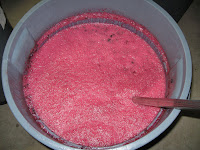
The merlot, cab franc, and lemberger finished fermentation after about 9 days, while the zinfandel was a little extra pokey. After 9 days, the zinfandel was still at brix = 6.4. But since I was getting all the gear out and cleaned, I decided to press everything on the same day and let the zinfandel finish in the carboy.
Next post please...
Cheers,
Noel
Merlot: brix = 21.0, PA = 11.6%, pH = 3.50, total acidity = 7.5 g/L
Cabernet franc: brix = 22.2, PA = 12.2%, pH = 3.42, total acidity = 7.1 g/L
Lemberger: brix = 21.6, PA = 11.9%, pH = 3.22, total acidity = 8.6 g/L
Zinfandel: brix = 28, PA = 15.4%, PA = 3.75, total acidity = 6.4 g/L
The WA grapes (merlot, cab franc, & lemberger) are a little lower brix & a little more acidic than I would have liked. On the other hand, the zin is a sugar powerhouse! I decided to leave the cab franc and the lemberger alone. The cab franc is in decent sugar space, while the lemberge is akin to a pinot noir so should be a little lower alcohol in my opinion. The merlot definitely needed some sugar, so I added sugar to reach brix = 23.0 (PA = 12.7%). The zinfandel definitely needs some amelioration to lower the sugar levels, so i added some acidulated water to lower the brix to about 25.6 (PA = 14%). That's a fancy way of saying that I added some tartaric acid to the water to make it about 6.5 g/L in total acidity so that we don't dilute the acid levels while fixing the sugar levels.
I'm going for a Right Bank Bordeaux blend with the merlot and cab franc so I chose to use Lalvin MT yeast strain that was isolated in Bordeaux and is supposed to emphasize the typical merlot flavors and aromas. I bought a big bag and used it for the merlot, cab franc, and lemberger (mainly because I had extra). For the zinfadel, I decided to use VQ-15 Rockpile yeast--a strain that was isolated from zinfandel fermentations in the dry Rockpile AVA. Since the zinfandel was dry-farmed in similar rocky conditions in the Sierra Foothills, I thought this yeast would be a good complement and really punch up those jammy zinfandel flavors.
After innoculation, the cooler temperatures kept things fairly slow. It took about 48 hrs before the skin cap started to form on the wines and after that it was a pretty slow, but steady fermentation. I added both DAP and Fermaid K after the lag phase and at 1/3 sugar depletion. Used a little extra than normal because the ferment was a bit stinky as a lot of darker thiol aromas were blown off during punch downs. The must temperatures never got above 65 °F or so due to the cold temps in my garage.


The merlot, cab franc, and lemberger finished fermentation after about 9 days, while the zinfandel was a little extra pokey. After 9 days, the zinfandel was still at brix = 6.4. But since I was getting all the gear out and cleaned, I decided to press everything on the same day and let the zinfandel finish in the carboy.
Next post please...
Cheers,
Noel
2010 Crush Recap
Every year, I swear that I'm going to document the fermentation step by step. And every year, that goal eludes me. This year is no different, friends. The 2010 West Coast harvest was delayed for several weeks due to cold weather that prevented the grapes from ripening. The weather finally warmed up in early October only to result in 1-2 weeks of >100°F temperatures that resulted in flash ripening and grape dehydration. I lost a chance at making some Suisan Valley carignan because the abrupt heat wave rendered the crop unharvestable--turns out this is probably not a bad thing for the sanity of the winemaker at Aaronap Cellars. It also turned out that my splitting the harvest between California and Washington was probably the best darn thing that I could have done as WA was cool, but didn't experience the intense heat wave in early October.
While the grapes were riding the temperature swings on the West Coast, I was busy staying on top of my viticulture class and trying to survive the pressure pot at work. Sad to say, but there were times when I felt like the grapes were adding to the stress instead of being my salvation. But the day finally arrived when I got the notice that my WA grapes were arriving--at the same time as the Amador County Zinfandel. Woo hoo! One trip to M&M! On Friday, Oct 25, I headed south to pick up the grapes. Really enjoyed that trip because I was the only one on the dock that morning and got to meet and chat with Frank Musto, the man behind M&M Winegrape. Really nice guy--very glad I finally had a chance to meet him.
It took awhile to load 1500 lbs of grapes and frozen must. The only hiccup in the whole order was that M&M had inadvertently mixed my lemberger grapes in with the extras that were being crushed and frozen. Although I had wanted to make a white lemberger, no biggee. More red wine and less crushing work. Not a bad trade off. But back to the grapes--yeah, you read right. 1500 lbs in total.
540 lbs of Two Mountains Winery merlot, Yakima Valley, WA
324 lbs of Two Mountains Winery cabernet franc, Yakima Valley, WA
324 lbs of Amador County zinfandel
400 lbs (or so) of Two Mountains Winery lemberger, Yakima Valley, WA (7 5 gal buckets of frozen must which was a little more than the 324 lbs that I had ordered).
I celebrated continuously on the ride home that I own a pick-up truck with a full length bed--this is the reason why. Makes up for all those other days of 15-18 mpg commutes and finding a parking space! Here's what the load looked like when I got home:


That's my winemaking Joanne who was there to pick up her merlot grape order and help me crush. I was very thankful for her help because crushing 1200 lbs of grapes is a LOT of work. With her help, we were able to finish in about 3.5 hrs. That let me get most of the cleaning done before midnight.
Here's a couple of shots of me happy as a clam... "A crushing we shall go, a crushing we shall go!"
The grapes were really in quite nice condition. A little extra MOG (material other than grapes) that I would have liked in the WA grapes, but still very nice small berries. The zinfandel was pretty well raisined, but that's too be expected from zinfandel and what gives it the dark jammy notes. My only complaint was that the WA grape crates often had some dirt stuck in the crannies that fell into the crusher every so often as I was dumping--little extra terroir flavor, I guess.

Now the late harvest meant that it had turned a little cool in Massachusetts by the end of October. Given it was about 10:00 PM by the time I wrapped up cleaning and started to think about must analysis, I decided to just let the must sit overnight. The grapes were still cold from the cold storage facility at M&M and the garage was not going to get over 50 °F that night. Not an official cold soak, but a cool rehydration. At this point, it was almost midnight, so I headed off to the shower and a warm bed.
Cheers,
Noel
While the grapes were riding the temperature swings on the West Coast, I was busy staying on top of my viticulture class and trying to survive the pressure pot at work. Sad to say, but there were times when I felt like the grapes were adding to the stress instead of being my salvation. But the day finally arrived when I got the notice that my WA grapes were arriving--at the same time as the Amador County Zinfandel. Woo hoo! One trip to M&M! On Friday, Oct 25, I headed south to pick up the grapes. Really enjoyed that trip because I was the only one on the dock that morning and got to meet and chat with Frank Musto, the man behind M&M Winegrape. Really nice guy--very glad I finally had a chance to meet him.
It took awhile to load 1500 lbs of grapes and frozen must. The only hiccup in the whole order was that M&M had inadvertently mixed my lemberger grapes in with the extras that were being crushed and frozen. Although I had wanted to make a white lemberger, no biggee. More red wine and less crushing work. Not a bad trade off. But back to the grapes--yeah, you read right. 1500 lbs in total.
540 lbs of Two Mountains Winery merlot, Yakima Valley, WA
324 lbs of Two Mountains Winery cabernet franc, Yakima Valley, WA
324 lbs of Amador County zinfandel
400 lbs (or so) of Two Mountains Winery lemberger, Yakima Valley, WA (7 5 gal buckets of frozen must which was a little more than the 324 lbs that I had ordered).
I celebrated continuously on the ride home that I own a pick-up truck with a full length bed--this is the reason why. Makes up for all those other days of 15-18 mpg commutes and finding a parking space! Here's what the load looked like when I got home:


That's my winemaking Joanne who was there to pick up her merlot grape order and help me crush. I was very thankful for her help because crushing 1200 lbs of grapes is a LOT of work. With her help, we were able to finish in about 3.5 hrs. That let me get most of the cleaning done before midnight.
Here's a couple of shots of me happy as a clam... "A crushing we shall go, a crushing we shall go!"


The grapes were really in quite nice condition. A little extra MOG (material other than grapes) that I would have liked in the WA grapes, but still very nice small berries. The zinfandel was pretty well raisined, but that's too be expected from zinfandel and what gives it the dark jammy notes. My only complaint was that the WA grape crates often had some dirt stuck in the crannies that fell into the crusher every so often as I was dumping--little extra terroir flavor, I guess.

Now the late harvest meant that it had turned a little cool in Massachusetts by the end of October. Given it was about 10:00 PM by the time I wrapped up cleaning and started to think about must analysis, I decided to just let the must sit overnight. The grapes were still cold from the cold storage facility at M&M and the garage was not going to get over 50 °F that night. Not an official cold soak, but a cool rehydration. At this point, it was almost midnight, so I headed off to the shower and a warm bed.
Cheers,
Noel
Subscribe to:
Posts (Atom)